Back
Mission Updates
A New Chapter in On-Orbit Inspection: Two Clients in A Single Mission
Posted Posted in Mission Updates
Space assets are critical infrastructure. They power communications, navigation, climate monitoring, national security and the global economy.
When an anomaly occurs in orbit — an unexpected attitude change, a loss of signal, a suspected impact — operators must make high-stakes decisions quickly. Yet determining a spacecraft’s condition from the ground remains inherently limited.
On-orbit inspection changes that equation.
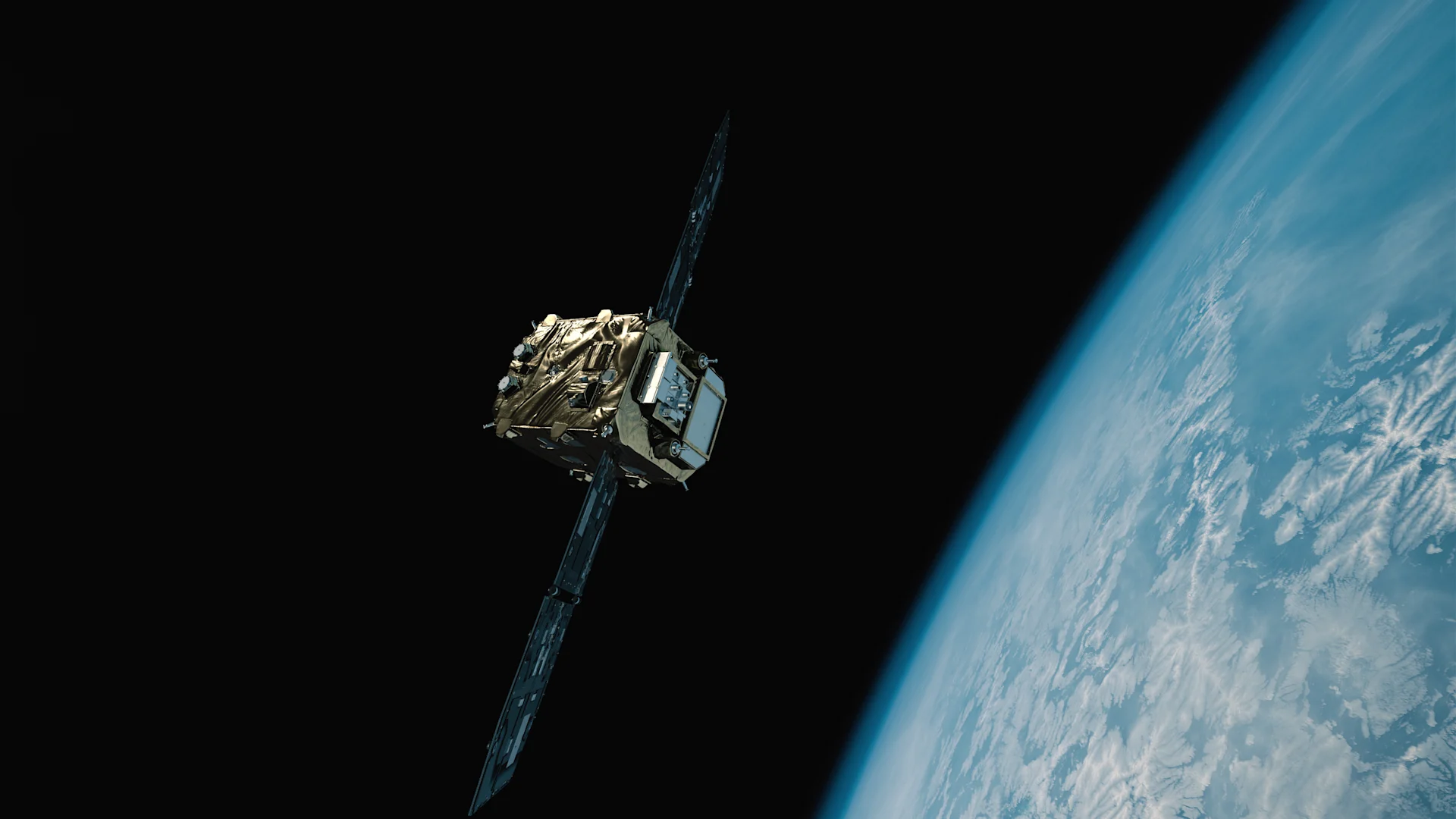
Astroscale Japan continues to advance its on-orbit inspection capability: the ability to approach a spacecraft safely and assess its condition directly, up close. Today, we are releasing a one-minute teaser video introducing our upcoming ISSA-J1 mission and the full Concept of Operations video coming soon.
Turning Uncertainty into Actionable Insight
Space situational awareness systems play a critical role in tracking objects and preventing collisions. However, ground-based observations and non-earth imaging cannot reveal the detailed conditions of a satellite hundreds of kilometers above Earth.
On-orbit inspection provides the missing piece — close-range imagery and characterization data that help operators move from assumption to informed decision-making.
Inspection is a foundational capability — enabling safer, more efficient satellite operations across the mission lifecycle — from anomaly response to servicing preparation.
The ISSA-J1 Mission
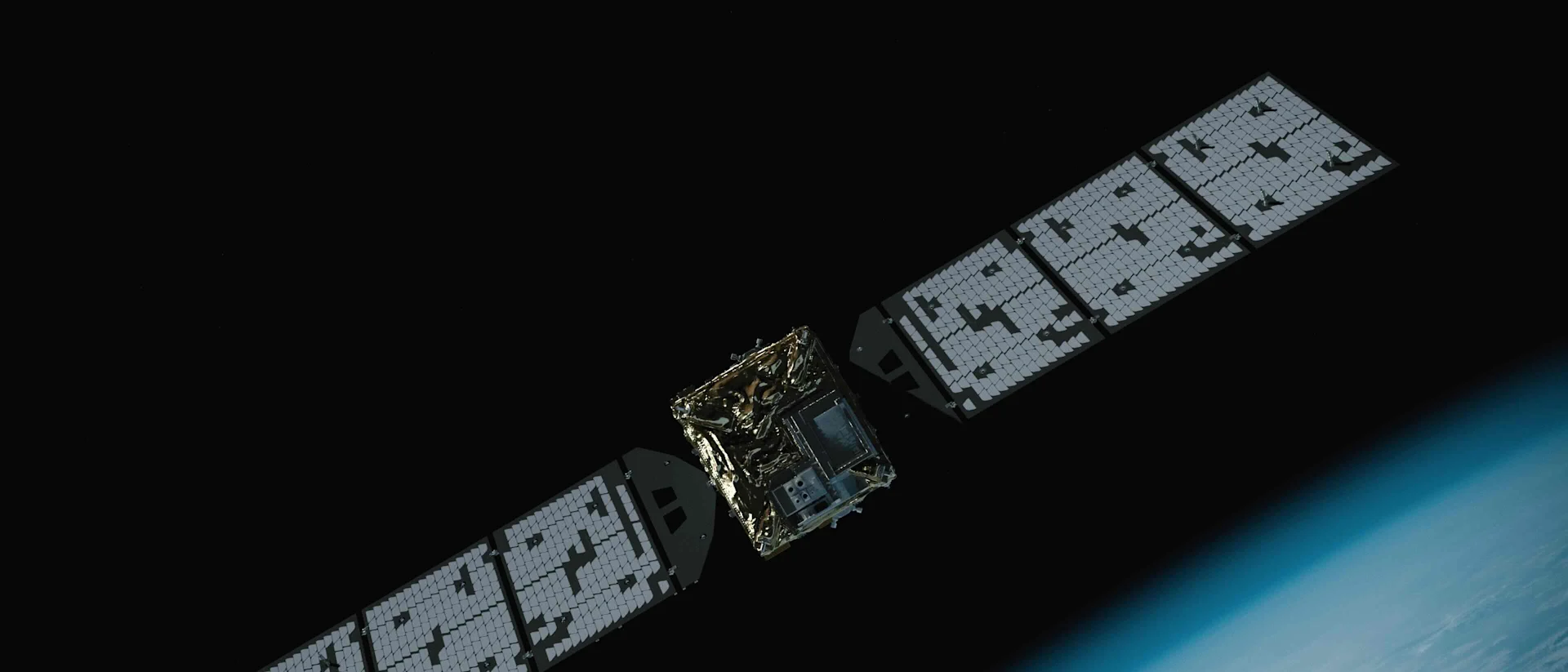
ISSA-J1 will further advance Astroscale Japan’s rendezvous and proximity operations capabilities by inspecting two retired Japanese satellites located in different orbits.
Successfully maneuvering to two clients across separate orbital regimes within a single mission would mark a world first for a commercial company.
By capturing close-range imagery and characterizing each object’s condition, ISSA-J1 will expand operational flexibility and lay the groundwork for scalable, responsible on-orbit services.
ISSA-J1 is being developed under Japan’s Small Business Innovation Research Program — specifically the Ministry of Education, Culture, Sports, Science and Technology Phase 3 Fund for large-scale technology demonstrations by startups.
The spacecraft is currently in assembly and is scheduled for launch in 2027.
As space operations grow more complex, access to accurate, in-orbit information will become increasingly essential. Astroscale Japan is committed to providing operators with the visibility and confidence needed to make informed, timely decisions in space.
Stay tuned for the full Concept of Operations.
END
Translation
Translations are machine-generated and may not be perfect.
All Categories
Recent Posts
Astroscale UK Strengthens Mission Readiness for World’s First Active Debris Removal Mission
September 30, 2026ESA's Space Environment Report Shows a Growing Gap Between Space Growth and Sustainability
September 15, 2026Astroscale France and HEMERIA Join Forces to Develop Sovereign GEO Capability for Global Markets
September 15, 2026