Back
Announcements
Astroscale Reveals World’s First Commercial Multi-Orbit Satellite Inspection Mission
Posted Posted in Announcements
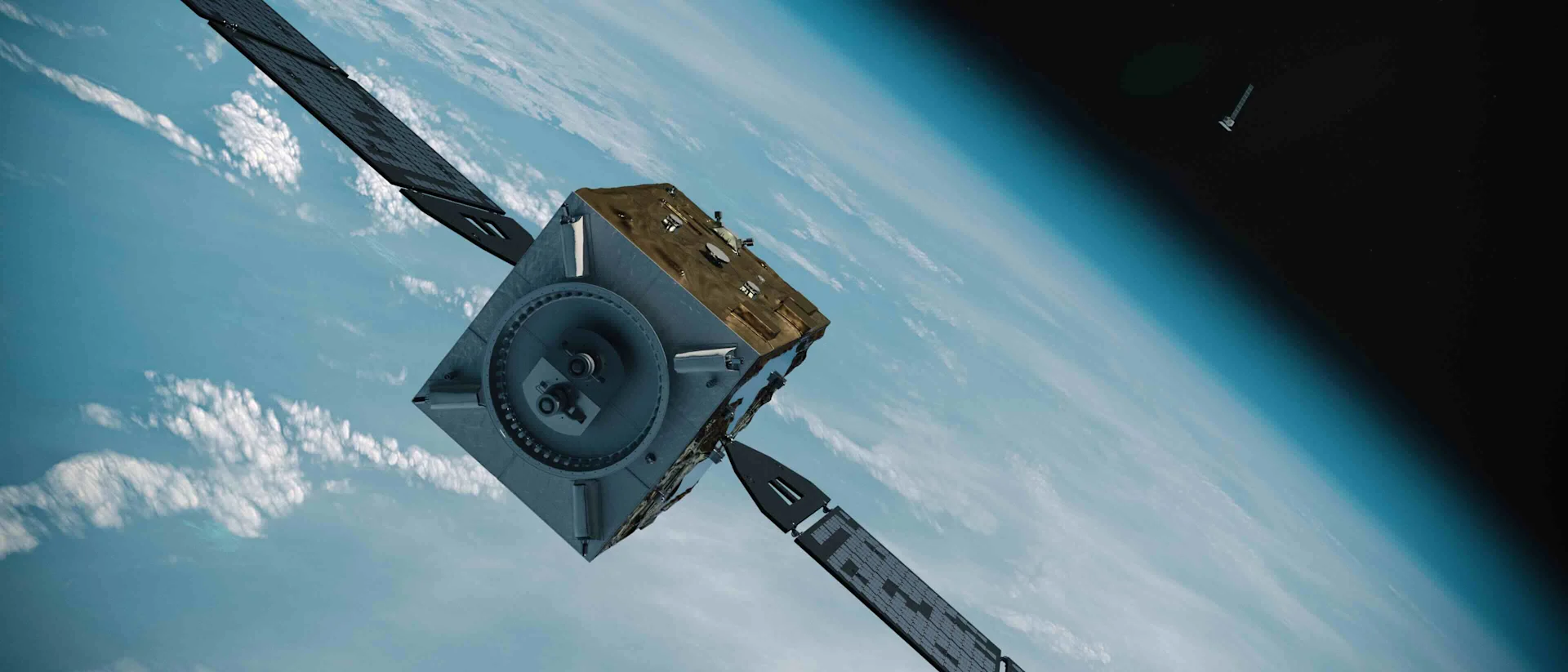
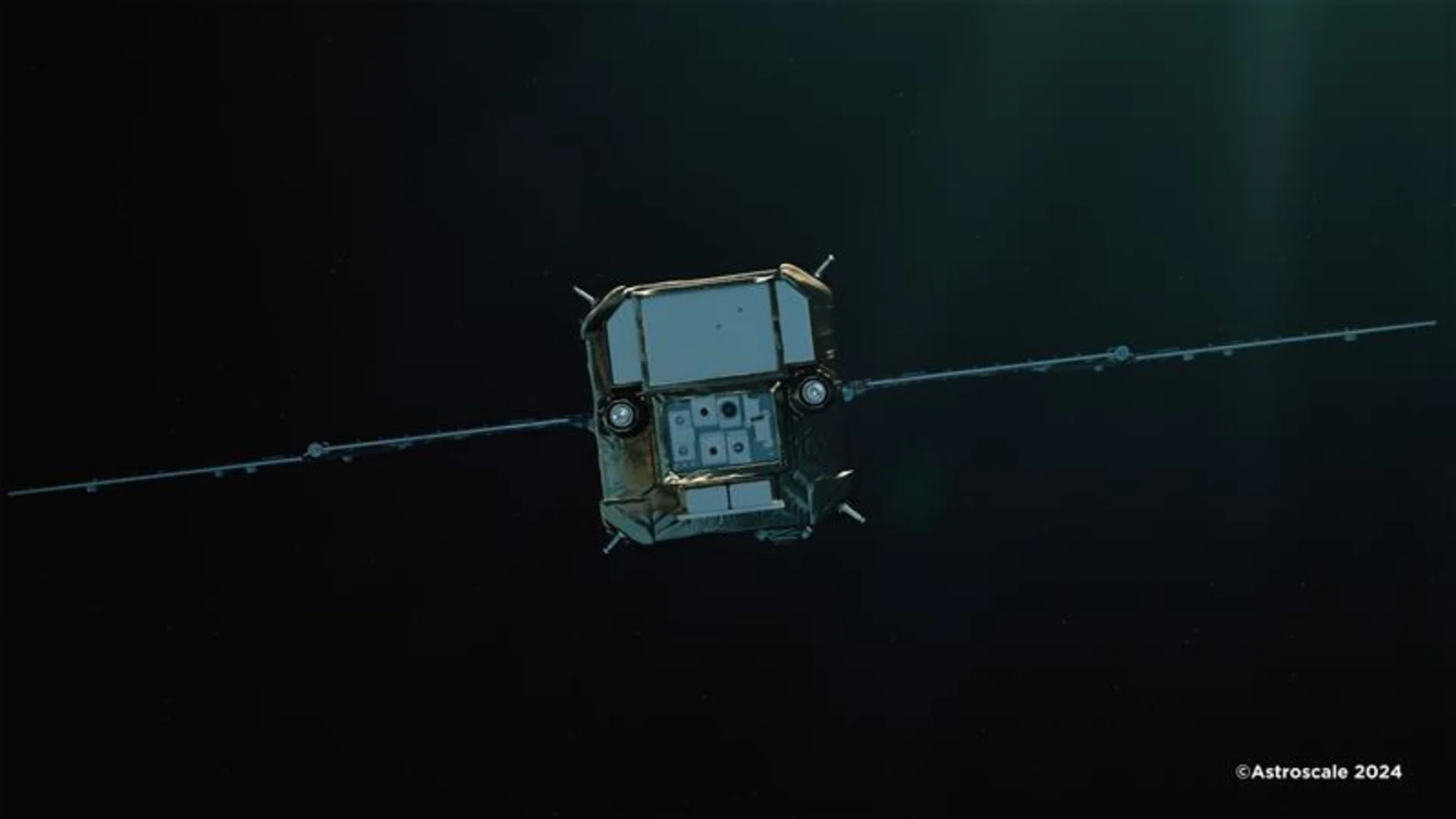
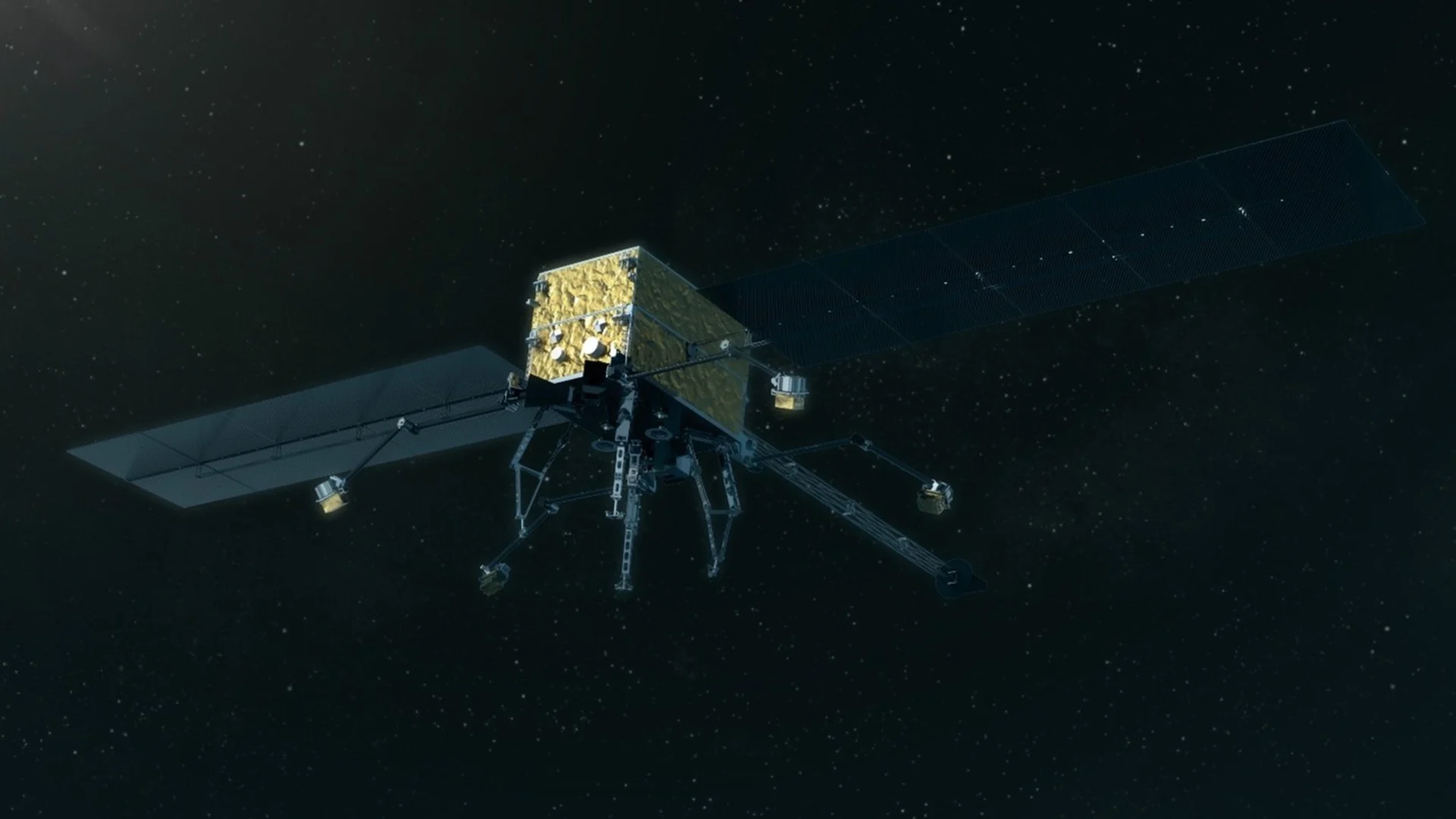
Tokyo, Japan, Apr. 6, 2026 –Astroscale Japan Inc. (“Astroscale Japan”), a subsidiary of Astroscale Holdings Inc. (“Astroscale”), the market leader in satellite servicing and long-term orbital sustainability across all orbits, has unveiled the client satellites and concept of operations for its ISSA-J1 mission, scheduled for launch in 2027, which will inspect two retired Japanese satellites in orbit.
The mission represents a major step forward for commercial in-orbit inspection and space situational awareness capabilities. By maneuvering to and inspecting two satellites in different orbits during a single mission, ISSA-J1 will demonstrate a world-first for a commercial company.
“On-orbit inspection provides critical insight into the condition of satellites that cannot be obtained from the ground,” said Nobu Okada, Managing Director of Astroscale Japan. “By inspecting multiple objects in different orbits in a single mission, ISSA-J1 will help demonstrate new capabilities that support satellite operators in understanding spacecraft condition and preparing for future servicing.”
Space situational awareness systems play a critical role in tracking objects and preventing collisions in orbit. However, ground-based observations and non-Earth imaging cannot reveal the detailed conditions of a satellite hundreds of kilometers above Earth. On-orbit inspection provides close-range imagery and characterization data that enable operators to better assess satellite health and make informed operational decisions.
This capability supports safer and more efficient satellite operations throughout the mission lifecycle, from anomaly response to preparation for future servicing.
ISSA-J1 is being developed under Japan’s Small Business Innovation Research Program, specifically the Ministry of Education, Culture, Sports, Science and Technology Phase 3 Fund for large-scale technology demonstrations.
Client Satellites
The ISSA-J1 mission will inspect two retired Japanese satellites launched in the early 2000s. By approaching them in orbit, ISSA-J1 will observe their current condition more than 20 years after launch, including their attitude, rotation behavior and signs of degradation.
The mission will conduct close‑range observations of multiple objects, closer than traditional monitoring methods, demonstrating new possibilities for on‑orbit inspection services.
Advanced Land Observing Satellite (ALOS)
Japanese name: “Daichi”
Operational period: Jan. 24, 2006 – May 12, 2011
Dimensions: 6 m x 3.5 m x 4.5 m
Solar array panel: 22 m × 3 m
Mass: about 4 metric tons
Orbital altitude: about 691 km
Advanced Earth Observing Satellite‑II (ADEOS‑II)
Japanese name: “Midori‑II”
Operational period: Dec. 14, 2002 – Oct. 31, 2003
Dimensions: about 5 m × 4 m × 4 m
Solar array panel: 24 m × 3 m
Mass: about 3.7 metric tons
Orbital altitude: about 803 km – 820 km
Concept of Operations
Following launch, the ISSA-J1 spacecraft will be deployed into Earth orbit and undergo initial system and communication checks before beginning on‑orbit operations. Once operational, the spacecraft will adjust its orbit and gradually approach the first client, ALOS.
Because objects in low Earth orbit travel at extremely high velocity, ISSA-J1 will begin observations from a safe distance while carefully assessing ALOS’ motion and condition. The spacecraft will then progressively reduce the distance while maintaining safety, conducting close‑range imaging and observation around ALOS without making physical contact.
After completing the first inspection, ISSA-J1 will depart from ALOS’s orbit and transition to a different orbit where the second client, ADEOS‑II, is located. This orbital transfer will be carried out gradually through a series of trajectory adjustments. Upon arrival, ISSA-J1 will repeat the same step‑by‑step approach and inspection process.
Through this sequence, ISSA‑J1 will demonstrate the ability to approach multiple clients in different orbits within a single mission, repeating a cycle of approach, inspection, departure and orbital transition.
ISSA‑J1 Spacecraft Specifications
Name: ISSA‑J1 (In‑situ Space Situational Awareness – Japan 1)
Dimensions: about 1,300 mm × 1,600 mm × 2,200 mm (solar arrays deployed: about 1,300 mm × 10,000 mm × 2,200 mm)
Mass: about 650 kg (with propellant loaded)
Thrusters: 12 total
10 chemical propulsion thrusters
2 electric propulsion thrusters
Related Information
ISSA‑J1 Mission Page: https://www.astroscale.com/en/missions/issa-j1
ISSA‑J1 Introduction Video: https://youtu.be/cS82fJ05iNA
ISSA‑J1 Concept of Operations Video: https://youtu.be/HUejD_f5huE
Translation
Translations are machine-generated and may not be perfect.
All Categories
Recent Posts
Astroscale UK Strengthens Mission Readiness for World’s First Active Debris Removal Mission
September 30, 2026ESA's Space Environment Report Shows a Growing Gap Between Space Growth and Sustainability
September 15, 2026Astroscale France and HEMERIA Join Forces to Develop Sovereign GEO Capability for Global Markets
September 15, 2026