What NASA's Van Allen Probes Reentry Teaches Us About Building a Circular Economy in Space
On March 10, 2026, NASA's twin Van Allen Probes spacecraft made their final descent through Earth's atmosphere, ending a mission that revolutionized our understanding of radiation belts surrounding our planet. The controlled reentry marked a responsible conclusion to a successful mission — but it also highlighted a fundamental inefficiency in how we operate in space today.
These spacecraft, each weighing approximately 1,500 pounds and containing valuable materials like aluminum, titanium and functional electronics, burned up completely. In any other industry, this would be considered wasteful. Imagine if the automotive sector simply discarded entire vehicles after their initial use, or if the aviation industry allowed retired aircraft to fall from the sky without salvaging their components. Yet this is precisely how we've operated in space for decades.
The Van Allen Probes reentry offers a crucial moment to examine how we can transform space operations from a linear, disposable model into a circular economy that maximizes the value of assets already in orbit. At Astroscale, we're developing the full spectrum of on-orbit servicing (OOS) solutions needed to make this transformation possible — and our customers in government, civil space agencies and national security should understand why this matters now.
The Linear Space Economy Is Unsustainable
Since the dawn of the Space Age, we've followed a straightforward pattern: launch a satellite, operate it until it fails or becomes obsolete, then either leave it in orbit as debris or dispose of it through atmospheric reentry. This linear approach made sense when space was relatively uncongested and launch costs were prohibitively high, making any post-mission servicing economically impractical.
But the orbital environment has changed dramatically. According to the European Space Agency, there are approximately 36,500 pieces of debris larger than 10 centimeters currently tracked in orbit, along with an estimated 130 million objects smaller than one centimeter. Each piece represents not just a collision hazard but also wasted resources — materials and manufacturing capability that required significant energy and investment to reach orbit.
The Van Allen Probes exemplify this waste. These spacecraft contained sophisticated instruments, power systems and structural components that functioned reliably for over a decade. While their scientific instruments were designed for specific research objectives, many of their subsystems — solar panels, batteries, propulsion systems and structural elements — could theoretically have served other purposes if we had the infrastructure to service, refurbish or repurpose them in orbit.
No other major industry operates this way. Automotive manufacturers design vehicles with recyclability in mind, recovering metals, plastics and electronic components for reuse. The aviation sector maintains and upgrades aircraft throughout their operational lives, extending utility and preserving value. Even the maritime industry salvages vessels at end of life, reclaiming materials and components. Space remains the outlier, treating orbit as both an unlimited resource and an unlimited waste disposal site.
This approach creates three interconnected problems. First, it generates debris that threatens operational spacecraft and future missions. Second, it wastes the embodied energy and materials already delivered to orbit at considerable expense. Third, it perpetuates a cycle of continuous manufacturing and launch that increases costs and environmental impact on Earth.
What a Circular Space Economy Looks Like
A circular economy in space would function fundamentally differently. Instead of the current launch-operate-dispose model, we would design satellites for servicing, maintain and upgrade them throughout extended operational lives, and ultimately repurpose or recycle their components when they can no longer serve their original function.
This isn't science fiction. The International Space Station has demonstrated many of these principles for over two decades. Astronauts routinely replace failed components, upgrade systems with new technology and extend the station's operational life through active maintenance. Robotic servicing missions have already proven the concept in geostationary orbit, where NASA's Robotic Refueling Missions demonstrated fuel transfer and component replacement on satellites never designed for servicing.
The economic logic is compelling. Launching mass to low Earth orbit costs thousands of dollars per kilogram, even with recent reductions in launch prices. Once materials reach orbit, they've already overcome Earth's gravity well — the most energy-intensive part of space operations. Keeping those materials in productive use, rather than discarding them, preserves that investment and reduces the need for new launches.
A circular space economy would encompass several key capabilities. Life extension services would keep functional satellites operating longer through refueling, component replacement and systems upgrades. Active debris removal would clear the most dangerous objects that threaten operational spacecraft. In-orbit servicing would enable repair and reconfiguration without costly return-to-Earth missions. Eventually, in-space manufacturing and recycling would transform defunct satellites into raw materials for new structures and components.
This transformation benefits everyone who depends on space infrastructure. Government agencies can extend mission lifetimes and reduce launch costs. Commercial operators can protect their satellite constellations from debris and defer replacement costs through servicing. National security organizations can maintain critical capabilities without gaps in coverage. The space industry as a whole gains stability and sustainability that enables long-term planning and investment.
Astroscale's Role Across the Spectrum
At Astroscale, we're developing solutions across the full spectrum of capabilities needed to establish this circular economy. Our work addresses both the immediate challenge of space debris and the longer-term goal of making space operations sustainable and economically efficient.
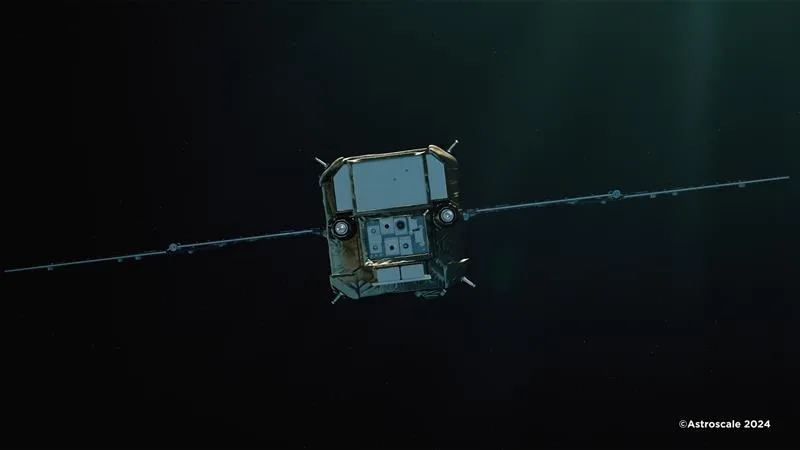
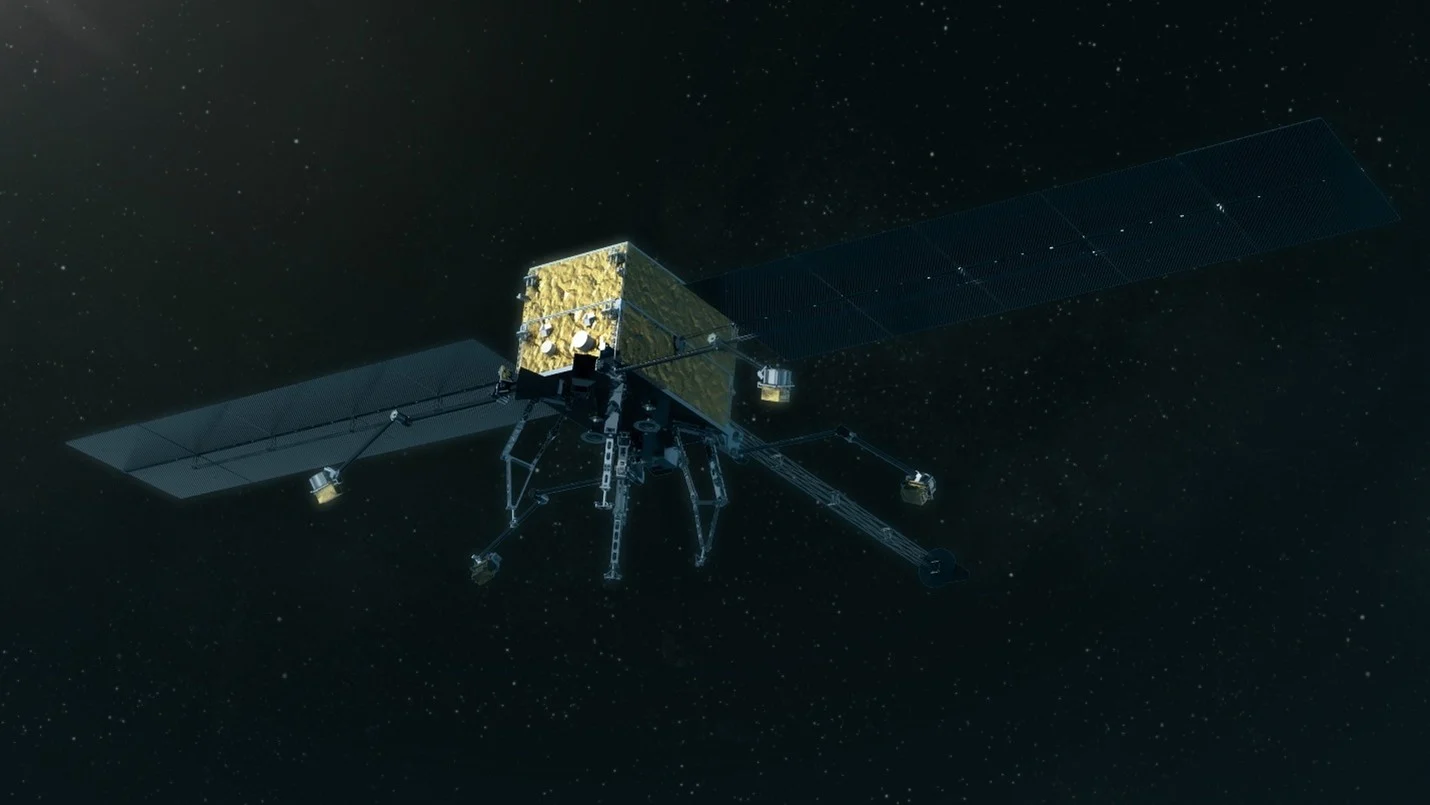
Our active debris removal services represent an essential first step. Before we can establish a thriving circular economy in orbit, we need to stabilize the environment by removing the most dangerous debris objects. Our End-of-Life Services by Astroscale-Multiple (ELSA-M) mission, planned for launch in 2026, will demonstrate the ability to safely remove multiple defunct satellites from orbit using a single servicing spacecraft. This capability directly addresses the debris accumulation problem while proving the technologies needed for other servicing applications.
The technology behind ELSA-M showcases our approach to solving real problems. Rather than relying on unproven concepts, we've developed and tested magnetic capture mechanisms that can dock with non-cooperative targets — satellites that weren't designed for servicing and may be tumbling or unresponsive. Our ELSA-d mission, launched in 2021, successfully demonstrated repeated capture and release of a client satellite in orbit, proving the fundamental technologies work in the actual space environment.
We've also developed docking plate technology that enables future satellites to be designed for servicing from the start. Our Astroscale Docking Plate provides a standardized interface that servicing spacecraft can reliably grasp, simplifying capture operations and enabling a wide range of services. Think of it as the equivalent of standardized fuel caps and maintenance access panels on vehicles — simple interfaces that enable efficient servicing without custom solutions for each target.
Life extension services form another critical component of the circular economy. Our Life Extension Services by Astroscale (LEXI) program will provide inspection, refueling and relocation services for satellites in geostationary orbit. By extending the operational lives of billion-dollar communications satellites, we preserve enormous investments and defer the need for replacement launches. A satellite that operates for 20 years instead of 15 generates additional revenue while reducing the number of launches required to maintain services.
Looking further ahead, we're researching in-space recycling and manufacturing capabilities in collaboration with Cislunar Industries and other partners under a U.S. Space Force contract. This work explores how defunct satellites can be transformed into raw materials and new components in orbit, closing the loop on the circular economy. While this technology remains in early development, it represents the ultimate goal: an orbital environment where materials circulate continuously rather than being discarded after single use.
Our innovation in controlled reentry technology addresses a critical safety concern. We've developed patented approaches that allow a single servicing spacecraft to safely deorbit multiple debris objects, directly addressing public safety concerns about uncontrolled reentries while aligning with international best practices for responsible space operations. This capability makes debris removal economically practical at scale — essential for stabilizing the orbital environment.
Why Customers Should Care Now
For our customers in government agencies, civil space programs and national security organizations, the transition to a circular space economy isn't a distant future concern. It's a present-day imperative that affects mission planning, spacecraft design and operational strategies.
The debris environment continues to deteriorate. Without intervention, collision risks will increase, threatening both existing assets and future missions. The Kessler Syndrome — a cascading collision scenario where debris generates more debris in a self-sustaining chain reaction — becomes increasingly probable in congested orbital regimes. Active debris removal services provide the only proven method to reduce this risk by removing the most dangerous objects before they collide.
Spacecraft design decisions made today determine servicing options for decades to come. Satellites launched without standardized docking interfaces or serviceable components lock in the disposable model for their entire operational lives. By contrast, spacecraft designed with servicing in mind from the start gain flexibility and extended utility. Government agencies and commercial operators should incorporate servicing capabilities into procurement requirements now to maximize future options.
Economic pressures favor the circular economy model. As launch rates increase and orbital congestion grows, the costs of the linear approach become increasingly apparent. Insurance rates rise in response to collision risks. Replacement launches become necessary when satellites could be repaired or refueled. The cumulative expense of continuous manufacturing and launch exceeds the cost of establishing servicing infrastructure.
National security considerations make space sustainability essential. Military and intelligence satellites provide critical capabilities that depend on predictable, secure access to specific orbits. Debris threats and orbital congestion create vulnerabilities that adversaries could exploit. A robust OOS capability enhances resilience by enabling rapid response to threats, extending mission lifetimes and reducing dependence on launch during conflicts when ground facilities might be targeted.
International norms and regulations are evolving rapidly. The United Nations Committee on the Peaceful Uses of Outer Space has developed guidelines for the long-term sustainability of space activities, including recommendations for debris mitigation and end-of-life disposal. National space agencies are implementing stricter requirements for post-mission disposal. Organizations that adopt circular economy practices now position themselves as leaders in responsible space operations, while those that delay face increasing regulatory and reputational risks.
The Van Allen Probes reentry was handled responsibly by NASA, with careful trajectory planning to ensure safe disposal. But responsible disposal is only the first step. The next generation of space operations must move beyond safe disposal to active preservation and reuse of orbital assets.
Building the Infrastructure Together
Establishing a circular economy in space requires collaboration across government, commercial and international partners. No single organization can develop all the necessary capabilities alone. At Astroscale, we're committed to working with customers and partners to build the infrastructure this transformation requires.
Our approach prioritizes proven solutions over speculative concepts. We demonstrate technologies through actual missions before offering them as commercial services. ELSA-d proved magnetic capture in orbit. ELSA-M will demonstrate multi-object removal. LEXI will show life extension in geostationary orbit. Each mission builds on previous successes, reducing risk and proving capabilities step by step.
We design our solutions to be flexible and adaptable to customer needs. Government agencies have different requirements than commercial operators, and national security missions demand capabilities beyond standard commercial services. Our modular approach allows us to configure servicing spacecraft for specific mission requirements while leveraging common technologies and operational experience.
We're also committed to transparency in our operations. Customers can engage with us throughout mission planning and execution, understanding exactly what we're doing and why. This openness builds the trust essential for long-term partnerships, especially in sensitive national security applications where reliability and predictability are paramount.
The transition from a linear to circular space economy won't happen overnight. It requires sustained investment in technology development, regulatory frameworks that encourage servicing and reuse, and cultural shifts in how the space industry thinks about spacecraft design and operations. But the direction is clear, and the benefits are compelling.
The Path Forward
When NASA's Van Allen Probes reentered Earth's atmosphere, they completed a successful scientific mission. But they also represented a missed opportunity — valuable materials and functional systems destroyed rather than repurposed for future use. We can do better.
The space industry stands at a crossroads. We can continue the linear model, launching more satellites to replace those we discard, accepting increasing debris risks and mounting costs. Or we can embrace the circular economy model that every other mature industry has adopted, maximizing the value of assets already in orbit while reducing waste and risk.
At Astroscale, we're building the solutions needed for this transformation. Our active debris removal services stabilize the orbital environment. Our life extension capabilities preserve existing investments. Our docking plates enable future servicing. Our research into in-space recycling points toward the ultimate goal of closed-loop operations where nothing is wasted.
For customers in government, civil space agencies and national security, the question isn't whether to transition to circular space operations, but how quickly to make the shift. Every satellite launched without servicing capabilities, every debris object left in orbit and every reentry of a salvageable spacecraft represents a step backward.
The Van Allen Probes taught us invaluable lessons about Earth's radiation environment. Their final descent can teach us one more lesson: that the disposable era of space operations must end. The circular economy in space is not just environmentally responsible — it's economically necessary and operationally essential.
We're ready to help make it happen. The question is: are you ready to join us?