La mission ADRAS-J honorée par le prix du ministre de la Défense
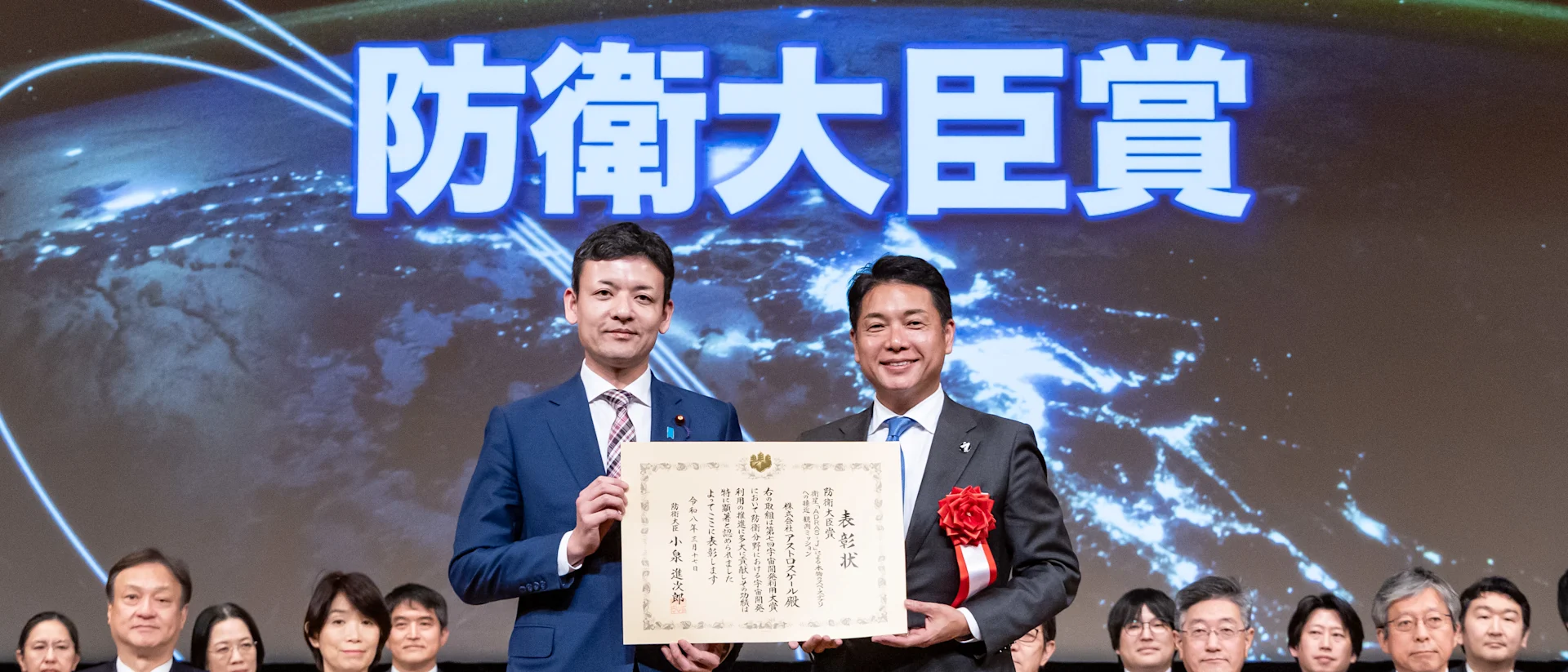
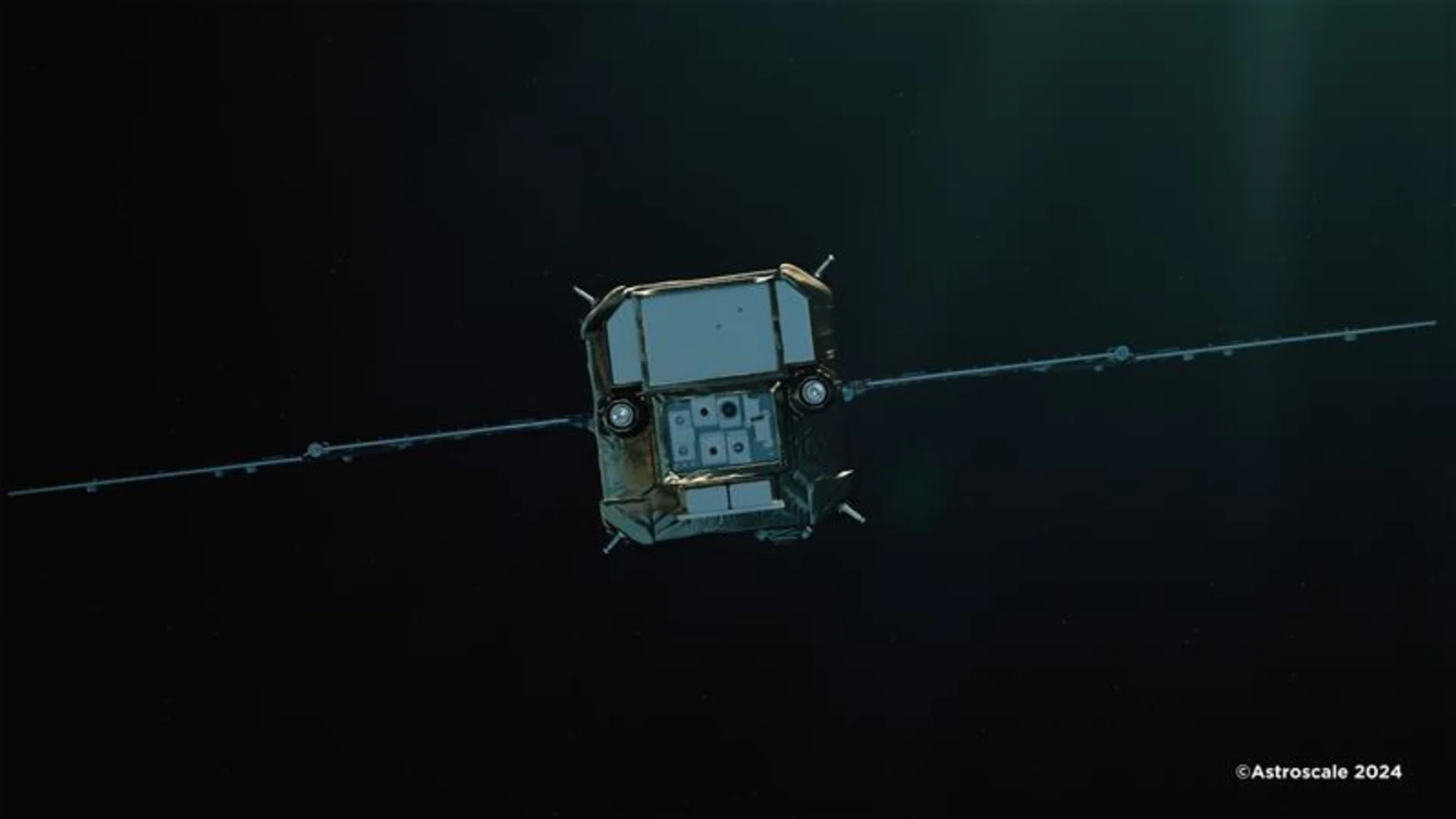
Astroscale Japan a reçu le Prix du Ministre de la Défense lors de la 7e édition des Prix du développement et de l'utilisation de l'espace. La cérémonie, qui s'est tenue le 17 mars, a récompensé notre mission révolutionnaire ADRAS-J – la première mission au monde à avoir réussi à approcher et à capturer des images rapprochées d'un gros débris spatial.
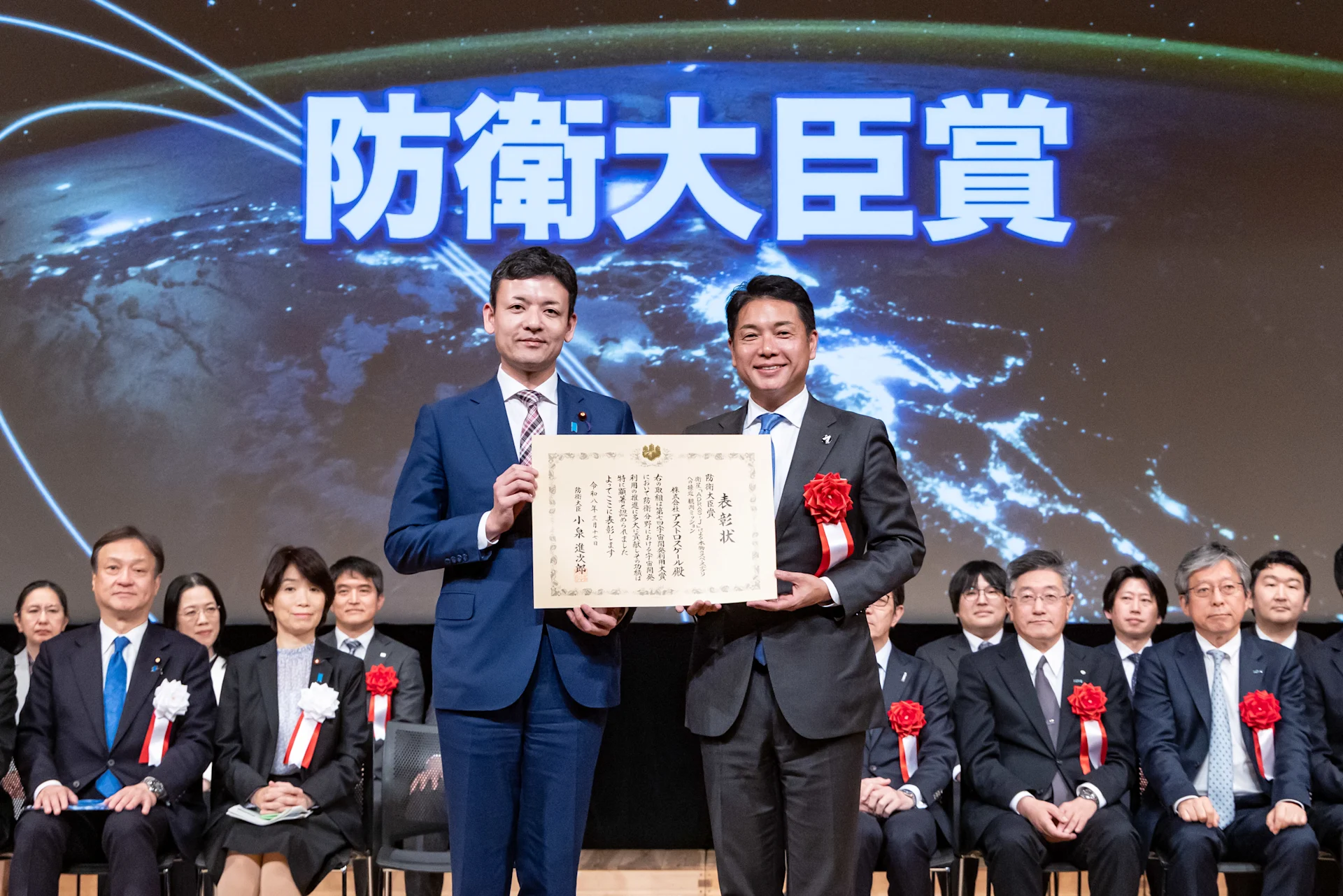
Organisés par le Cabinet du gouvernement japonais, ces prix récompensent des projets qui contribuent de manière significative à renforcer le leadership du Japon dans le secteur spatial. En honorant des initiatives novatrices, ce programme vise également à sensibiliser le public et à susciter son soutien à la présence croissante du Japon dans l'espace.
Le Prix du ministre de la Défense souligne tout particulièrement la contribution de l'équipe ADRAS-J à la sécurité publique, mettant en avant notre rôle dans la garantie d'une utilisation sûre et durable de l'espace pour les générations futures. Le comité de sélection a salué les premières mondiales réalisées par la mission, qui a réussi à approcher et à photographier un débris spatial de très près, soulignant que les technologies éprouvées ont le potentiel de faire progresser la réduction des débris et la connaissance de la situation spatiale. Le comité a également reconnu que le retrait des débris spatiaux représente un défi majeur pour l'humanité et a salué ADRAS-J comme une première étape importante pour y remédier. Cette réussite témoigne du talent et du dévouement de tous ceux qui, dans l'ombre, ont permis de concrétiser cette vision.
« La mission ADRAS-J a été l'une de nos plus importantes, démontrant nos technologies de rendez-vous et d'opérations de proximité », a déclaré Nobu Okada, directeur général d'Astroscale Japan. « Nous considérons ce prix comme une reconnaissance des succès de la mission, ainsi que comme l'expression des attentes élevées concernant nos capacités de maintenance en orbite. Nous remercions le pays hôte, le comité de sélection, le ministère de la Défense pour cet honneur, et la JAXA pour le contrat et le soutien qui ont rendu cette mission possible. »
La mission ADRAS-J a été sélectionnée par l'Agence d'exploration aérospatiale japonaise (JAXA) pour la phase I de son programme de démonstration de l'enlèvement commercial de débris spatiaux (CRD2). Cette mission visait à démontrer les technologies de rendez-vous et d'opérations de proximité (RPO), des capacités essentielles qui constituent le socle des futurs services en orbite, notamment l'enlèvement des débris spatiaux, également appelé « services routiers spatiaux ».
Depuis son lancement en février 2024, ADRAS-J a franchi une série d'étapes historiques en s'approchant d'un étage supérieur de fusée non coopératif (mesurant environ 11 mètres de long, 4 mètres de large et pesant environ 3 tonnes). Parmi ces réalisations figurent une approche à longue portée, la capture d'images des débris, des observations en vol, un passage à moins de 15 mètres des débris et la validation réussie des capacités d'évitement de collision autonomes du vaisseau spatial.
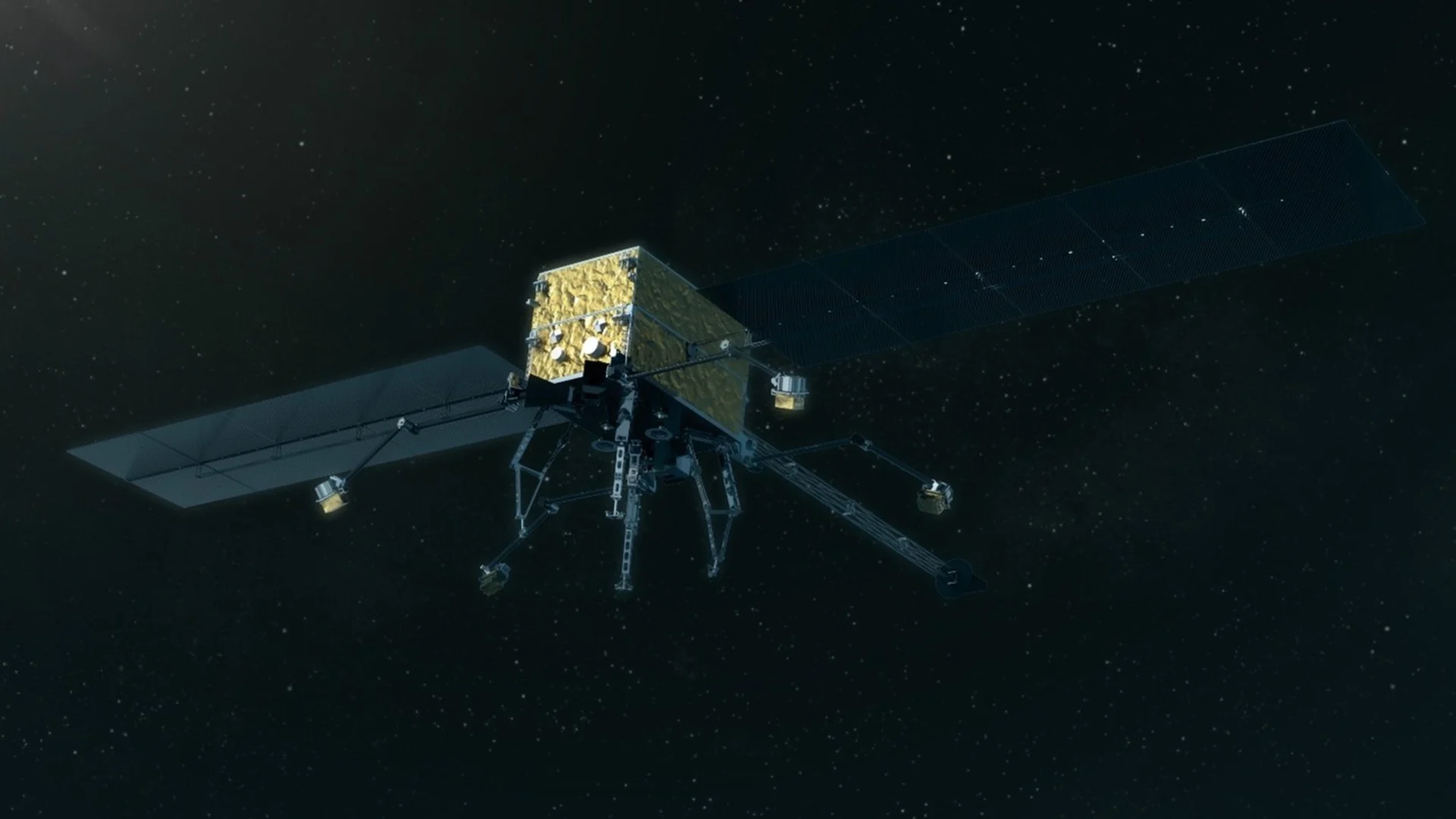
Astroscale Japan a également été retenue pour la phase II du programme CRD2. Le lancement de notre prochain vaisseau spatial, ADRAS-J2, est prévu pour l'exercice fiscal 2027.
S’appuyant sur le succès de cette mission qui n’a pas été récompensée, ADRAS-J2 tentera d’approcher, d’observer et finalement d’éliminer les mêmes débris ciblés par ADRAS-J. Le développement et les essais du vaisseau spatial sont actuellement en cours.
À propos de la démonstration d'enlèvement commercial de débris (CRD2)
CRD2 est un programme de la JAXA visant à éliminer activement les gros débris d'origine japonaise en coopération avec des entreprises privées. Il a pour objectif d'acquérir des technologies de déblaiement afin de répondre au problème de plus en plus critique des débris spatiaux et de soutenir les activités commerciales des entreprises japonaises.
L’élimination active des débris (ADR), dont l’efficacité et la nécessité ont été discutées lors de conférences scientifiques et de réunions d’agences spatiales, n’a pas fait de progrès concrets dans l’établissement d’un cadre international en raison des difficultés à démontrer et à acquérir les technologies nécessaires.
Traduction
Les traductions sont générées automatiquement et peuvent comporter des imperfections.
Toutes catégories
Articles récents
Astroscale UK Strengthens Mission Readiness for World’s First Active Debris Removal Mission
30 septembre 2026ESA's Space Environment Report Shows a Growing Gap Between Space Growth and Sustainability
15 septembre 2026Astroscale France and HEMERIA Join Forces to Develop Sovereign GEO Capability for Global Markets
15 septembre 2026